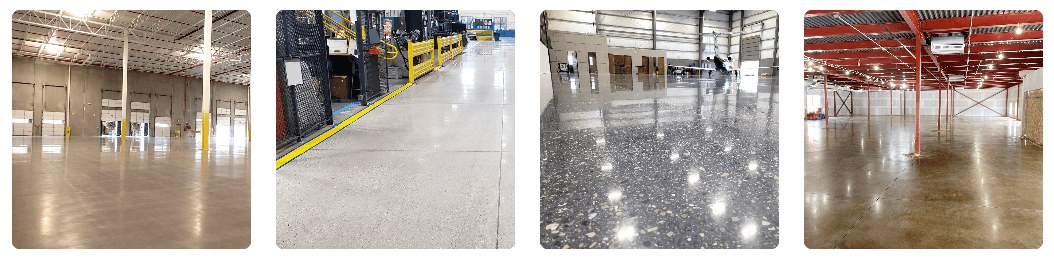

Superior Polished Concrete Flooring in MI, OH & IN
Polished concrete, also known as concrete polish, is obtained through a process of refurbishing the surface of concrete into a stronger and glossy finished floor. The process of grinding, strengthening, then polishing your concrete transforms the concrete into a durable flooring solution. Polished concrete installation by MSC will improve your existing concrete’s performance and protection.
Benefits of Our Polished Concrete Flooring
Polished concrete provides minimal downtime and low maintenance costs. The chemically hardened surface provides improved impact strength and remains easy to clean and maintain. Polished concrete increases light reflectivity and aesthetic appeal. Michigan Specialty Coatings polished concrete systems has become a preferred choice by our clients in many markets. Contact us today to learn why our clients decided to protect their investment by choosing MSC Floors.
A Green Solution: Polished concrete is considered a green flooring option because it makes use of the materials already present. Most buildings are built on a concrete slab; polishing the exposed concrete eliminates the energy and material needed by applying a floor coating. It is something to consider when modernizing towards a more green solution. Note: LEED 2009 standards contain guidelines for using polished concrete flooring to qualify for LEED credits.
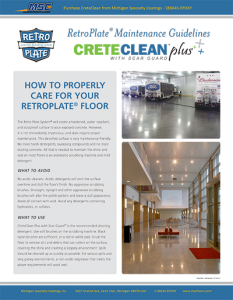
The concrete polish’s relatively high coefficient of friction can make it non-slippery. It can reduce dust mite and allergen problems, and does not support mold growth. A concrete floor that has been hardened and polished will have an extremely long life expectancy compared to other flooring. For example, some tile may only last 10–20 years, but a polished concrete installation that has been properly maintained may give over 100 years of service. How do I maintain a polished concrete floor ? We recommend CreteClean Plus. The densified surface is very maintenance friendly. No more harsh detergents, sweeping compounds and no more dusting concrete. All that is needed to maintain the shine and seal on most floors is an automatic scrubbing machine and mild detergent. CreteClean Plus with Scar Guard™ is the recommended cleaning detergent to keep your floor glossy and haze-free.
We are a distributor and installer of CureCrete / RetroPlate products.
Download the Crete Clean Plus – Full Maintenance Brochure for Polish Concrete
Download the Crete Clean Plus – Sale Sheet for more info
Download the Crete Clean Plus – Automatic Scrubber Cleaning Instructions for Polished Concrete
Download the Crete Clean Plus – Mop and Bucket Cleaning Instructions for Polished Concrete
Download the Crete Clean Plus Maintenance Products for Polish Concrete Price List
Benefits of polished concrete installation by Michigan Specialty Coatings:
- Cost efficient – Lowest 10-year life cycle cost
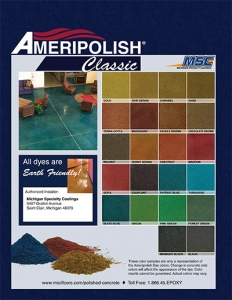
- Custom finishes, sheen and colors available
- Less permeable than concrete
- High Abrasion, scratch, and staining resistance
- No cure time required
- Protection from contaminants
- Easy to clean and maintain – virtually maintenance free
- Meets and exceeds OSHA requirements
- No VOCs or odors
- Qualifies for inclusion on Silver, Gold and Platinum LEED
- No Adverse reaction to ultraviolet light or water spray
- Eliminates moisture vapor failures related to floor coverings
- Does not support combustion – eliminates smoke or toxic fumes
- Extremely high light reflectivity compared to coatings
Michigan Specialty Coatings most common industries for polished concrete installation :
- Industrial plants
- Warehouses
- Manufacturing facilities
- Commercial space
- Retailers and grocers
- Schools & Churches
- Restaurants, bars, clubs
- Showrooms
- Correctional Facilities
- Arenas & Convention Centers
- Automotive Industry
- LEED
- Medical Industry
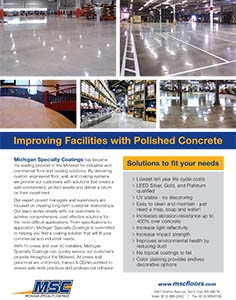

CASE STUDY
Tier 1 automotive supplier turns to Michigan Specialty Coatings for flooring solutions
When a fast growing automotive parts supplier had the chance to purchase a large manufacturing facility in Metro Detroit, they had to take advantage of the opportunity.
The million square foot building, which was previously owned by an automotive manufacturer, lacked the infrastructure the new owner required. Many improvement projects were necessary to put the facility at optimal efficiency.
The international parts supplier contracted Michigan Specialty Coatings to provide a wide range of services throughout the facility. Projects included failed coating removal & line striping to concrete polishing & industrial coatings.
Downtime had been minimized while improving the facility because of MSC’s large workforce. Multiple crews routinely delivered solutions on time and on budget, providing a long service life.
Project Brief
- Over 11,000 square feet of line striping and walkway coatings
- Over 18,000 square feet of epoxy coating removal with polished concrete installed with densifier and stain guard
- Concrete patching and repairing to improve plant safety
- Over 1,300 linear feet of joint treatment
Frequently Asked Questions About Polished Concrete
Facility owners throughout Michigan, Ohio, and Northern Indiana often ask about the performance and long-term value of polished concrete before upgrading their floors. In manufacturing plants, warehouses, and distribution centers, concrete floor polishing can transform an existing slab into a hardened, low-maintenance surface built for demanding conditions. If you have been researching what is polished concrete or exploring how to polish concrete floors properly, the answers below address durability, customization, safety, and ideal applications for industrial environments.