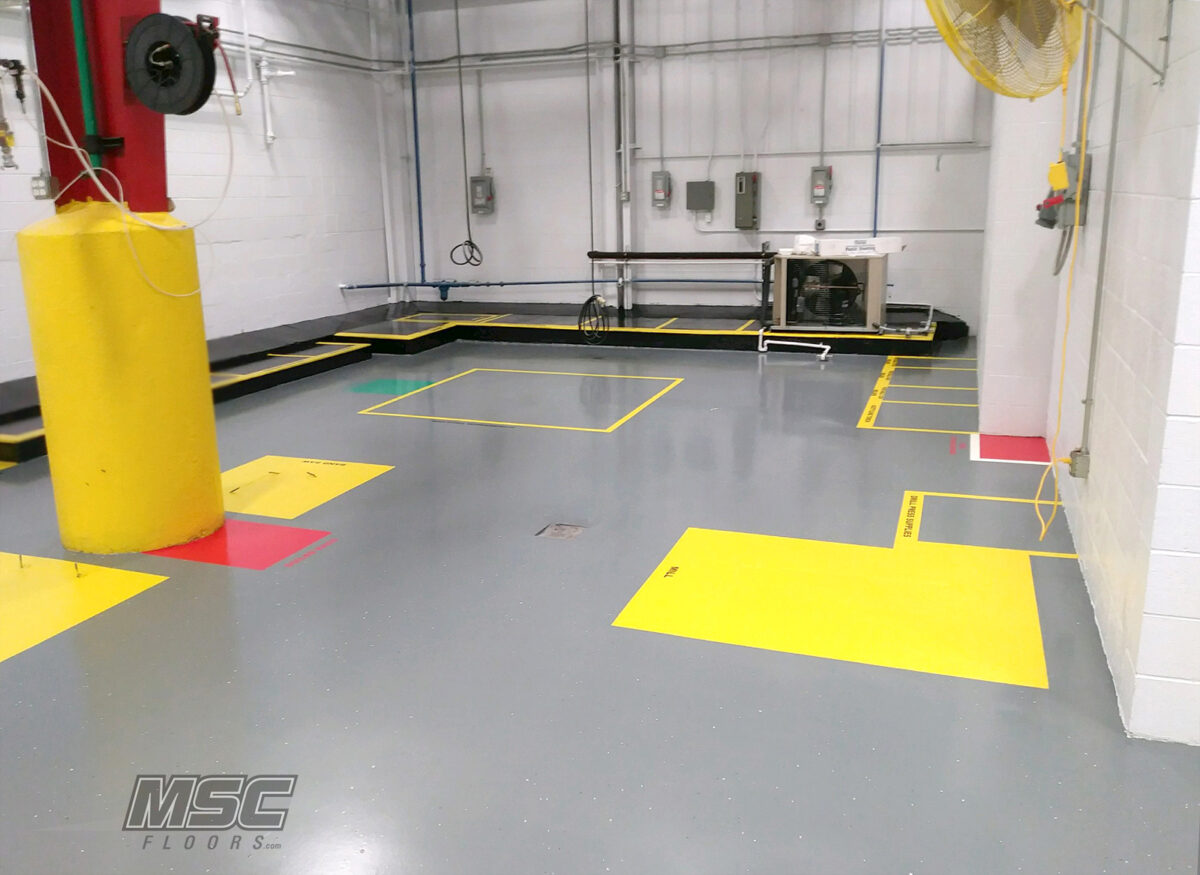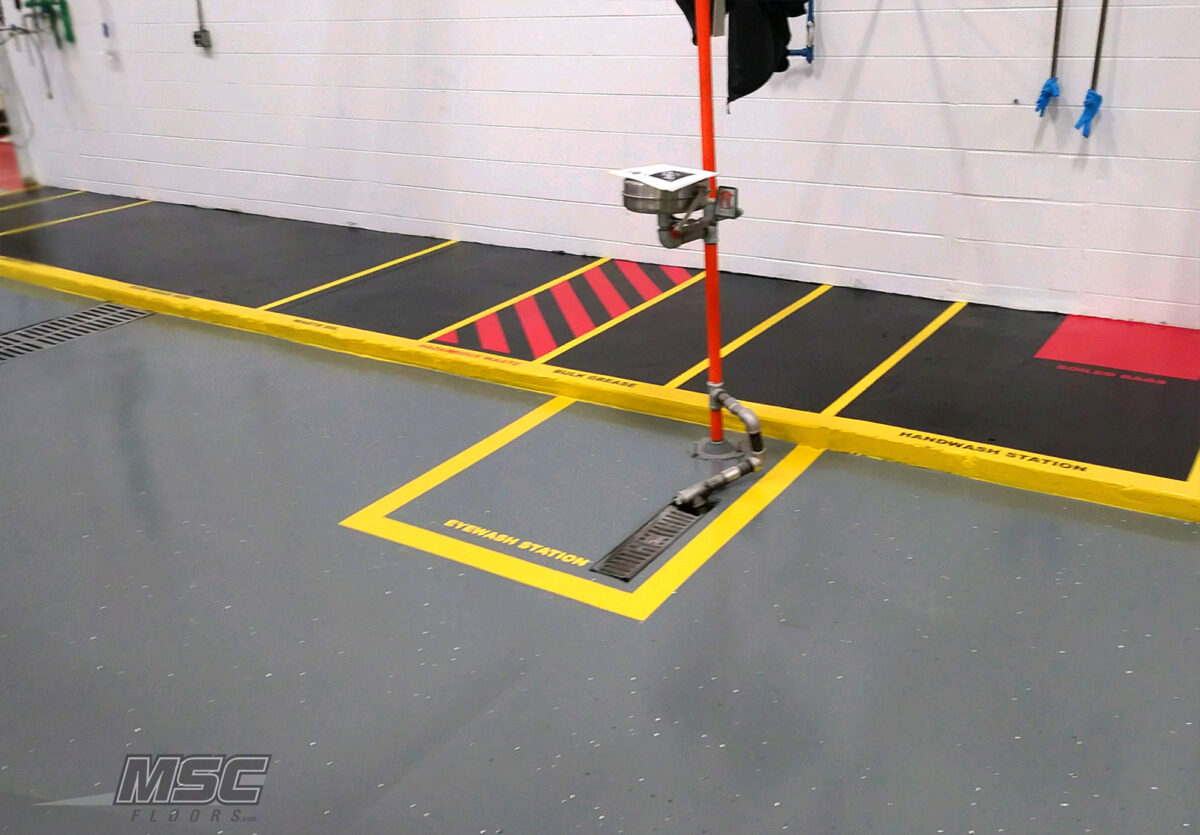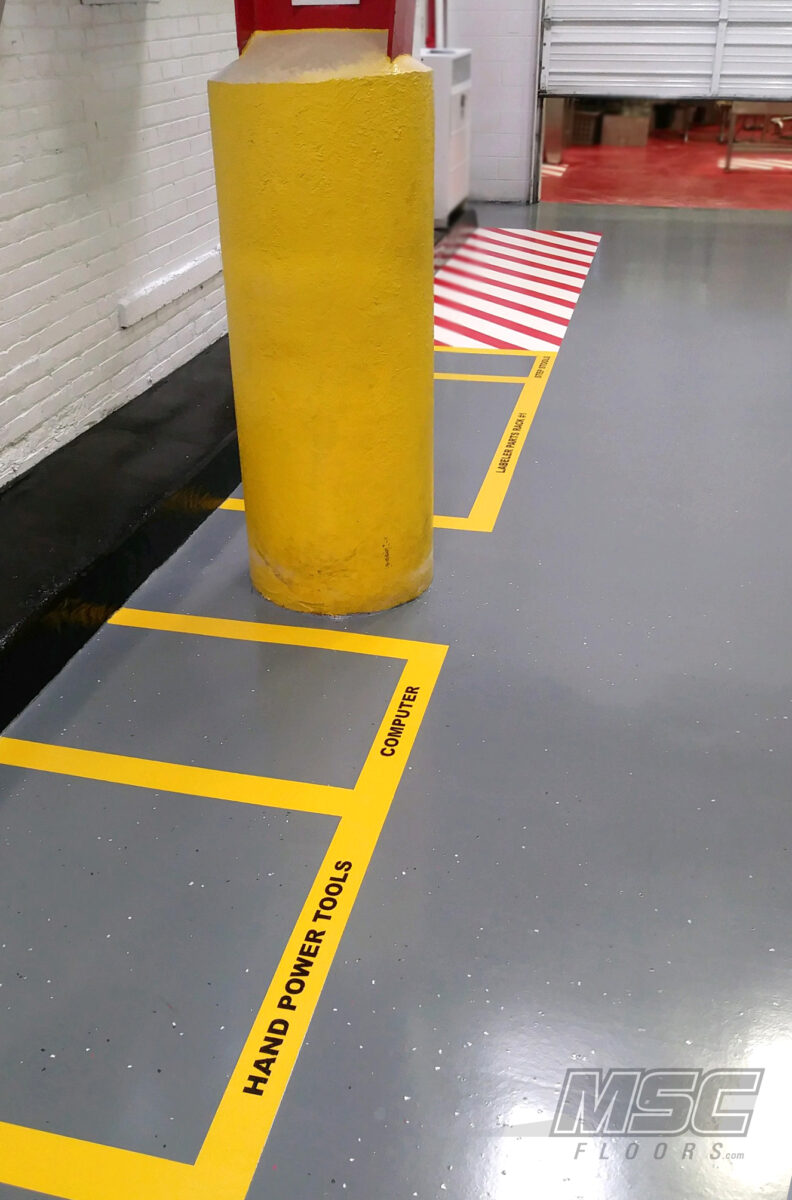
These rules standardize color, width, placement, spacing, and application so the floor communicates clearly and consistently across any facility. Read more about the meaning and importance of 5S at our blog page.
1. STANDARD 5S COLOR MEANINGS
Use these unless a customer already has a corporate color standard. This is the most universally accepted scheme.
Safety & Hazard Colors
- Yellow: Aisles, walkways, travel lanes, equipment paths
- Red: Defects, scrap, quarantine, emergency stop zones
- Orange: WIP (Work-In-Progress), inspection, staging
- Green: Finished goods, approved materials, “good” inventory
- Blue: Raw materials, components, general storage
- Black/Yellow Stripes: Physical hazards (edges, pinch points, drop-offs)
- Red/White Stripes: Keep-clear areas (electrical panels, emergency equipment)
- Black/White Stripes: Housekeeping / non-safety mandatory zones
Optional Enhancements
- Purple: Chemical or hazardous material zones
- Gray / White: Non-critical boundaries or aesthetic alignment (common in offices or labs)
2. LINE WIDTH GUIDELINES
Wide enough to see under forklift tires and from a distance, but not overpowering.
| Application | Recommended Width |
| Standard aisle lines | 2–4 inches |
| High-traffic forklift lanes | 4–6 inches |
| Pedestrian walkways (edge lines) | 4 inches |
| Hazard markings (chevrons/stripes) | 4–6 inches |
| Keep-clear boxes / equipment boxes | 2–6 inches, depending on area size |
| Work cells / department borders | 2–4 inches |
MSC Best Practice:
Use 4-inch epoxy or urethane striping for durability and visibility in manufacturing/logistics environments. Anything thinner wears out too quickly under lift traffic.
3. DISTANCE & SPACING RULES
These prevent crowding, improve visibility, and align with safety clearance requirements.
Aisles & Pedestrian Walkways
- Standard aisle width: 36–48 inches minimum
- Forklift aisles: Width of forklift + 3–4 feet
- Pedestrian walkway separation: At least 3 feet from equipment or forklift lanes
- Walkways near walls: Keep 2 inches off the wall to prevent scuffing and easy cleaning
Keep-Clear Zones (Red/White or Yellow)
- Electrical panels: 36 inches minimum clearance (OSHA 1910.303)
- Emergency showers/eyewash: 36 inches minimum
- Fire extinguishers / hose reels: Mark a 3×3 ft or 4×4 ft box
Storage Locations & Equipment Footprints
- Racks, shelving, machines: Maintain 2–6 inches offset around the footprint
- Pallet parking spaces: Typically 48×48 inches or per customer standard
- WIP lanes: Width = pallet + 6 inches clearance
Hazard Striping
- For ledges, edges, or pinch points:
Place black/yellow diagonal striping starting within 6 inches of the hazard.
4. SYMBOLS & STENCILS (Recommended for 5S Clarity)
These increase comprehension and reduce training time.
Common Markings
- Footprints: Pedestrian-only zones
- Arrowheads: Material flow direction
- Pallet outlines: storage and staging
- Text boxes: “WIP,” “FINISHED GOODS,” “NO STORAGE,” etc.
- Numbers/letters: Helps operators identify lanes or storage rows
Color/Stencil Rules
- Use high-contrast (white or black) lettering on colored zones.
- Maintain 2–3 feet spacing between large symbols for readability.
7. OTHER Items Should Be Included
Minimum Contrast Requirements
- Striping should contrast with the floor by at least 50% for safety recognition.
Lighting Considerations
- Low-light areas require higher visibility colors or reflective systems.
Barriers vs. Lines
- In high-risk forklift areas, floor lines alone may not be enough → recommend physical barriers or guardrails.
Workflow Reinforcement
- Use arrows to indicate material flow, not just lanes.
- Use zones to separate value-added vs. non-value-added areas.
8. Quick Reference Chart (Give this to customers)
| Zone Type | Color | Width | Clearance / Offsets |
| Aisles | Yellow | 2–4″ | 36–48″ min |
| Forklift lanes | Yellow | 4–6″ | Lift width + 3–4 ft |
| Pedestrian walkways | Green or Yellow | 4″ | 3 ft from equipment |
| Keep-clear (fire/electrical) | Red/White | 2–4″ | 36″ minimum |
| Hazard areas | Black/Yellow | 4–6″ | Within 6″ of hazard |
| WIP / Inspection | Orange | 2–4″ | Pallet size + 6″ |
| Finished goods | Green | 2–4″ | 2–6″ around footprint |
Top 5S Benefits for Flooring & Line Striping
1. Improved Safety
- Clear pedestrian walkways reduce fork-truck/foot traffic conflicts.
- Defined equipment zones prevent “drift” or unsafe storage creep.
- High-visibility striping cuts trip hazards and confusion.
- Color coding reinforces hazard zones (chemical storage, egress lanes).
2. Increased Efficiency
- Operators move faster when paths and staging areas are obvious.
- Eliminates wasted motion searching for material, tools, or pallets.
- Helps maintain takt time by reducing travel distance and traffic jams.
3. Reduced Waste
- Prevents overproduction stack-ups by marking WIP limits and buffer zones.
- Stops damage to materials caused by improper staging or blocking.
- Supports lean flow—items only go where they’re supposed to go.
4. Enhanced Organization
- Dedicated floor markings act as “visual instructions,” no training required.
- Keeps aisles, work cells, and storage areas consistent shift to shift.
- Makes abnormalities immediately visible (missing carts, misplaced pallets).
5. Better Communication
- Instant visual cues replace verbal or written reminders.
- Standardized color systems allow cross-shift, cross-department alignment.
- Supports onboarding—new employees understand layout day one.
6. Cleaner, Easier-to-Maintain Floors
- Striping and 5S zoning force clutter off the floor, reducing debris load.
- Cleaner aisles reduce abrasion, extending coating lifespan
(aligned with MSC’s cleaning guidance: dirt and debris abrade coatings and shorten life). - High-gloss epoxy enhances visibility—issues like leaks and spills stand out immediately.
7. Supports Compliance & Audits
- Reinforces OSHA-required egress routes, hazard zones, and forklift lanes.
- Professional striping helps with FDA, USDA, ISO, and corporate safety audits.
- “Aisle integrity” shows auditors a disciplined, controlled workspace.
8. Boosts Morale & Ownership
- A well-marked floor signals professionalism and pride.
- Operators take better care of visually organized environments.
- Reduces frustration caused by unclear expectations.
9. Faster Training & Fewer Errors
- Visual cues reduce verbal instruction time.
- Zones standardize material flow, reducing misplacement and rework.
- Mistakes become obvious—“wrong place = instantly visible.”
10. Extends Floor System Life
- Traffic stays where it belongs, reducing uneven wear.
- Prevents forklifts from damaging coating in unintended areas.
- Cleaner, controlled zones prevent chemical or impact abuse.