How Long Do Epoxy Floors Last?
February 23, 2026
How to Choose the Right Flooring for High-Traffic Manufacturing Facilities
March 9, 2026
Industrial Flooring & OSHA Compliance
Industrial flooring plays a large part in workplace safety and regulatory compliance. When your facility’s floors are designed with safety in mind, you reduce the risk of injuries and citations from the Occupational Safety and Health Administration (OSHA). The right combination of coatings, striping techniques, and maintenance practices helps keep your facility in compliance with OSHA floor marking standards so you’re ready for the next inspection.
OSHA Standards Related to Flooring
OSHA’s Walking-Working Surfaces standard, 29 CFR 1910.22, sets the baseline for safe floors in general industry. This regulation requires that all workplaces be kept clean, orderly, and sanitary. Walking and working surfaces must be maintained so they are free of hazards that could cause slips, trips, or falls.
OSHA standards for floor marking come into play as part of this broader requirement. Standard 1910.22 expects employers to identify and control hazards. Marking walkways, forklift lanes, storage zones, and hazardous areas creates the visual separation between pedestrian and vehicle traffic that OSHA requires.
OSHA’s Safety Color Standards under 29 CFR 1910.144 and 1910.145 establish the meanings of specific safety colors. While these sections specifically regulate signs and tags, many facilities follow the same color conventions in their floor markings to maintain consistency. This includes using red for danger and fire protection equipment, yellow for caution and physical hazards, and green for safety equipment and egress-related information.
In short, OSHA expects your floors to be safe and clearly marked to prevent accidents. Your flooring decisions directly affect the ability to meet these expectations.
Flooring Features That Support OSHA Compliance
Industrial flooring systems should be designed to support OSHA floor striping standards and general safety requirements. High-performance coatings and thoughtful striping contribute to your compliance in several ways:
- Slip-resistant finishes: Epoxy and urethane coatings can be formulated with aggregate to improve traction in wet or oily conditions. This reduces slip hazards and aligns with OSHA’s requirement to maintain safe walking-working surfaces.
- Clearly defined traffic lanes: Painted or embedded striping separates pedestrian walkways from forklift routes to lower the risk of collisions and injuries.
- Consistent color schemes: Strategic use of safety colors helps your workers locate hazardous areas, fire equipment, and emergency exits without a second thought.
- Durable floor markings: OSHA requires floor striping to resist wear and tear. Integrating the striped color directly into the floor coating reduces the need for frequent touch-ups. If you follow OSHA floor tape standards instead, maintenance is required to keep it in good condition.
- Chemical-resistant surfaces: If your facility handles corrosive materials, your floor coatings must resist chemical damage. This keeps the surface intact, which makes it easier to clean and less likely to develop pits or cracks that create trip hazards.
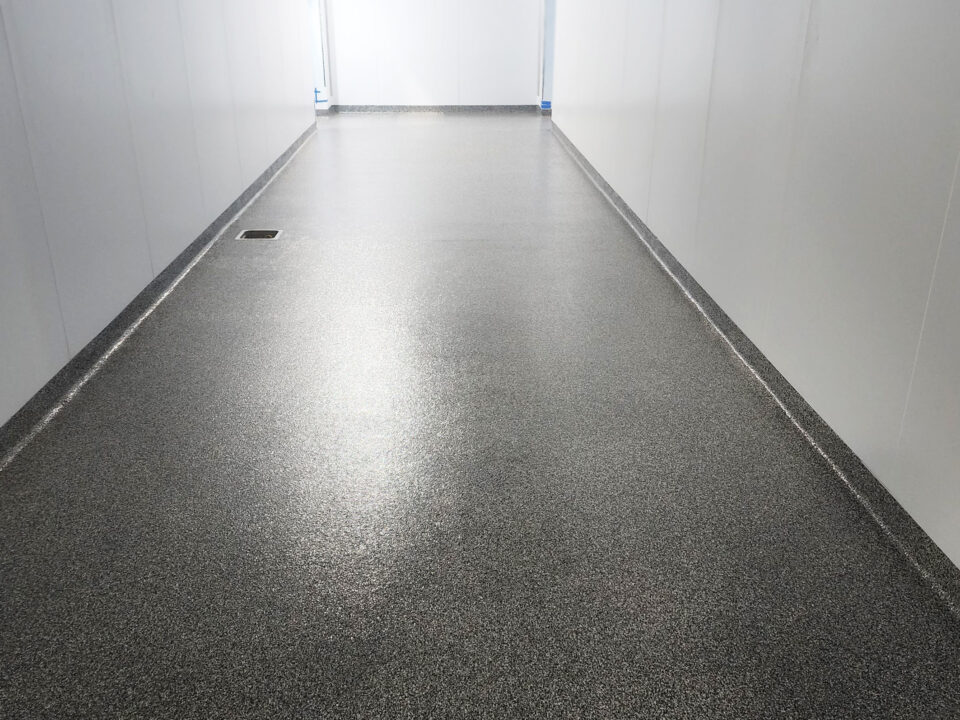
- Easy-to-clean systems: Seamless epoxy flooring eliminates grout lines and joints where debris and bacteria can accumulate. This supports OSHA’s requirement for clean, sanitary conditions.
Common OSHA Violations Linked to Flooring
Many OSHA citations trace back to issues that start at ground level. If you’re not careful, seemingly minor problems can escalate into reportable injuries and compliance penalties. Common violations include:
- Slippery surfaces
- Faded or missing floor markings
- Torn or lifting floor tape
- Cracked or uneven concrete creating tripping hazards
- Obstructed aisles and walkways
How to Ensure Continuous OSHA Compliance
Ongoing compliance requires vigilance. Here’s how to keep your facility aligned with OSHA floor marking standards and walking-working surface requirements:
- Inspect your floors regularly
- Address cracks and surface damage promptly
- Reapply striping before it fades
- Replace worn or peeling floor tape
- Adjust floor markings to convey changes in traffic patterns
- Train employees to report floor hazards immediately
Get Help Choosing OSHA-Friendly Flooring Materials
Installing the right industrial flooring system, complete with striping and other safety markings, is a practical way to support OSHA compliance. If you’re not sure where you need floor striping, MSC Floors would be happy to help. We offer professional floor striping services in Michigan, Ohio, and Northern Indiana. Whether you need a permanent, custom floor striping layout or a temporary solution, we’ve got you covered. Check out the 5S floor marking guidelines we follow. Then, contact us to schedule a free site survey.
FAQs
How long does industrial floor striping last?
Longevity depends on traffic levels and the striping method you use. Professionally installed epoxy striping can last several years in high-traffic environments.
Can floor striping be installed without shutting down operations?
In many cases, work can be phased to limit disruption. Coordinate scheduling with your contractor to keep critical areas accessible.
What’s the difference between epoxy striping and floor tape?
Epoxy striping is applied as a coating that bonds to the concrete, while tape is adhered to the surface. Epoxy offers superior durability in heavy industrial settings.
How do you determine the best floor marking layout?
A site evaluation identifies traffic flow, storage needs, emergency egress paths, and hazard zones. From there, a striping plan can be developed that supports safe movement and aligns with OSHA standards.
How often should industrial floors be recoated?
Recoating schedules depend on wear, chemical exposure, and maintenance practices. A professional inspection can help determine the recommended timeline for your facility.