Revolutionizing Heavy-Duty Factory Floors
May 18, 2026
ESD Flooring for Electronics & Robotics Manufacturing
June 1, 2026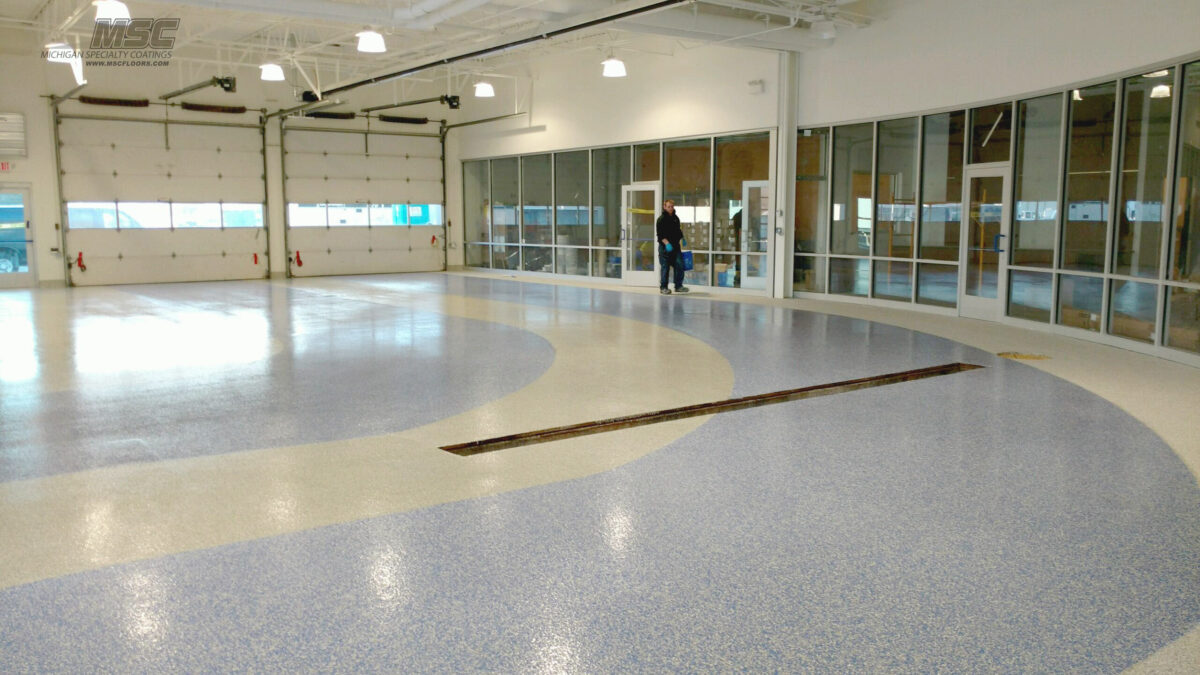
Epoxy Flooring Benefits for Automotive Service Centers
Automotive service providers operate in demanding conditions. Heavy vehicles, hot tires, dropped tools, spilled fluids, and tracked-in snow and mud are just a few of the stresses your floors must endure. Under these conditions, untreated concrete is prone to staining, cracking, spalling, and dusting. Epoxy floor coating addresses all these risks and more.
Epoxy floor coating is a resin-based system applied over prepared concrete to create a dense, non-porous surface. Once cured, this protective layer resists chemicals, impact, abrasion, and moisture while improving traction, visibility, workflow, and cleanliness. For automotive facilities in Michigan, Ohio, and Northern Indiana, industrial epoxy floors are a practical investment that directly supports safety and productivity.
Chemical Resistance
Automotive facilities regularly handle motor oil, transmission and brake fluid, coolant, fuel, and battery acid, all of which pose a threat to bare concrete. Epoxy floor coating creates a chemical-resistant barrier that prevents absorption. When spills occur, liquids bead on the surface rather than soaking into the slab. This containment protects the integrity of your floor and simplifies compliance with environmental standards.
Your installer will assess the types of chemicals used in your service center and recommend a solution with the appropriate resistance profile. The result is chemical-resistant flooring that supports productivity in several ways:
- Reduced downtime for repairs
- Easier inspections
- Lower remediation costs
Impact & Abrasion Resistance
Auto shop floors are subjected to constant mechanical stress. Epoxy floor coating adds a protective layer that distributes heavy loads and absorbs impact more effectively than bare concrete. While it doesn’t make the floor indestructible, epoxy flooring reduces surface damage caused by daily operations.
Impact-resistant epoxy systems offer the following benefits:
- Resistance to tire wear and turning forces
- Protection against dropped tools and parts
- Fewer patching projects to repair cracks and spalling
- Less disruption to your service schedule
Moisture Resistance
Consider the many ways water can come in contact with your auto shop floors. Routine washdowns, condensation, snow and ice melt, and subsurface vapor transmission are just a few examples.
When moisture soaks into porous, untreated concrete, it dissolves the salts within the slab, which crystallize on the surface. If the concrete contains rebar, prolonged or repeated moisture exposure can cause corrosion, resulting in internal stress and cracking. Wet-dry cycling also opens the capillary structure of concrete. The slab becomes more absorbent, making it increasingly vulnerable to future moisture intrusion and chemical attack.
Properly specified workshop epoxy flooring can include moisture-resistant primers to prevent these conditions. Your installer will also test moisture levels and evaluate the slab before applying the floor coating to determine whether additional vapor-mitigation layers are needed. This may be an important step to prevent moisture from rising through the slab, which can cause bubbling or delamination.
Moisture-resistant flooring supports your operations in several ways:
- Reduced risk of coating failure
- Fewer unplanned shutdowns
- Extended system lifespan
Slip Resistance
Slip-and-fall incidents are among the most common workplace injuries in automotive environments. Oil slicks, coolant leaks, water tracked in from outside, and dust or metal shavings can easily create slippery conditions.
Epoxy flooring formulated with slip-resistant aggregates increases traction without making the floor difficult to clean. Your installer can tailor the texture to match your operations, creating a uniform surface that helps technicians move confidently throughout the shop.
Slip-resistant floor coating safety benefits include:
- Lower risk of slips and falls on wet or oily floors
- Consistent performance across the entire surface
- Customizable textures for service bays, wash areas, and storage rooms
Enhanced Visibility
Lighting quality directly affects safety and performance in service bays. Poor visibility slows inspections, increases the chance of errors, and contributes to eye strain. Standard concrete floors absorb light and create a dull, shadowed environment.
On the other hand, workshop epoxy flooring offers a high-gloss, light-reflective surface that distributes overhead lighting more effectively. This reduces dark spots around lifts, workbenches, and vehicle undercarriages.
Consider how enhanced visibility can support your operations:
- Faster, more accurate inspections
- Reduced lighting demand
- Cleaner, more professional-looking shop
Zoning & Workflow Optimization
When your auto shop floor communicates clearly, you can expect safer movement and a more organized workflow. Integrated striping within an epoxy coating system creates high-visibility boundaries that guide daily operations.
Unlike taped markings that peel or fade, embedded striping is durable and long-lasting, even when subjected to hot tires and routine cleaning. Choose colors strategically for consistent messaging across your shop, and work with an installer to design layouts that comply with OSHA 29 CFR 1910.22 and 5S floor marking guidelines.
Color-coded stripes and other floor markings can be used to designate the following areas:
- Pedestrian walkways
- Vehicle lanes
- Hazard zones around lifts and machinery
- Tool storage and staging areas
- Emergency exit paths
Improved Air Quality
Air quality in your auto shop affects employee health and equipment performance. As untreated concrete wears, it releases dust particles. These particles become airborne as vehicles and people move around the shop, settling on work surfaces, contaminating components, and circulating through your HVAC system.
Applying an epoxy floor coating seals the concrete and eliminates dusting. To avoid introducing harmful vapors into your workspace, be sure to select a low-VOC, non-toxic formulation. This limits odors during installation and reduces lingering emissions that could affect indoor air quality in the long run.
The benefits of maintaining cleaner air inside your facility include:
- Healthier working conditions
- Reduced equipment maintenance demands
- More consistent cleaning standards
Fast Cleanup
Spills are inevitable in automotive environments. When fluids drip onto untreated concrete, they penetrate the slab’s porous surface almost immediately. Even brief delays in cleanup allow oil, coolant, and grease to soak in. Once absorbed, these contaminants are difficult to remove, leading to unsightly stains and labor-intensive cleanup that rarely restores the floor to its original condition.
Non-porous epoxy flooring responds completely differently. Fluids remain on top of the coating, allowing staff to easily wipe or mop them away. Cleanup is a breeze, and stains are far less likely to set in.
Here’s how the ability to clean up spills quickly helps your facility run more smoothly:
- Fewer slipping hazards
- Less time spent cleaning
- Enhanced shop aesthetics
- Improved sanitation standards
Long-Term Cost Savings
Leaving your concrete uncoated may seem like the most cost-effective option at first, but untreated slabs demand more intensive cleaning, frequent crack repair, and premature replacement. Assuming proper installation and routine care, a high-quality epoxy flooring system can perform well for many years in demanding automotive settings. Instead of reacting to deterioration, your facility operates on a stable, protected foundation.
Epoxy flooring installation is an investment that pays you back in multiple ways:
- Lower cleaning and maintenance costs
- Fewer interruptions from floor repairs
- Longer service life for your existing slab
Bolster Your Auto Service Center from the Ground Up
The safety and productivity benefits of epoxy floor coating are clear. If you’re looking to improve your shop’s working conditions, improve its professional appearance, and protect your concrete infrastructure, MSC Floors can help.
We have been transforming concrete surfaces in Michigan, Ohio, and Northern Indiana for over 20 years. Our team would be happy to help you design and install a world-class epoxy flooring system for your automotive service center. We are committed to being your customer-focused contractor from beginning to end, so contact us today to discuss how our services can benefit your facility.
FAQs
How long does epoxy floor coating installation take?
Most projects take several days, depending on the size of your automotive service center, the condition of your concrete, and the curing time of the specified system. Pre-installation crack repair and surface preparation also factor into the schedule. Your installer will provide an accurate timeline before work begins.
Will the installation disrupt daily operations?
Some disruption is unavoidable, but projects can often be phased to lessen the impact. Work may be scheduled in one part of your facility while other sections remain operational. Careful planning is the best way to minimize downtime.
Are epoxy floors resistant to hot tires?
Yes, as long as the system is properly specified. High-performance epoxy and urethane topcoats withstand heat and friction from vehicle tires, reducing the risk of surface softening or tire marks on your service bay floors.
How long does epoxy floor coating last in automotive service bays?
The lifespan depends on traffic levels, chemical exposure, and maintenance practices. In many auto service centers, professionally installed epoxy systems perform well for 10 to 15 years before recoating is needed. Routine care and prompt spill cleanup help extend the coating’s lifespan.
How should epoxy floors be maintained after installation?
Sweeping and mopping with approved cleaners are usually all that’s required. Avoid abrasive tools and harsh chemicals that could damage the surface. Also, conduct periodic inspections to identify and resolve minor issues before they spread.